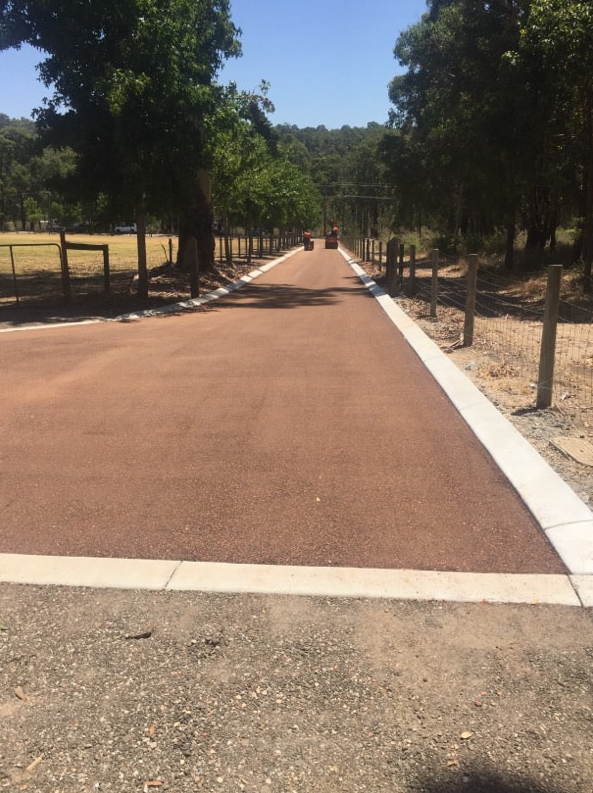
Choosing the right surface for a driveway, access road or larger trafficable area involves more than deciding how the finished pavement should look. The existing ground conditions, pavement preparation, expected traffic, drainage and intended use all influence which surfacing method is appropriate.
Spray & Seal bitumen is one option that can provide a durable and practical surface when it is installed over a properly prepared pavement. Rather than using a premixed layer of asphalt, the process involves spraying a bituminous binder onto the prepared base before applying and rolling aggregate into the binder.
For property owners and businesses in Penrith, NSW, understanding how Spray & Seal works can make it easier to determine whether it is appropriate for a particular site.
What Is Spray & Seal Bitumen?
Spray & Seal is a pavement surfacing method that combines sprayed bituminous binder with a layer of selected aggregate.
During installation, the prepared pavement is sprayed with an appropriate application of bitumen. Aggregate is then spread across the binder and rolled so that the stone becomes embedded and forms the trafficable surface.
Depending on the project and required specification, the process may involve more than one application.
The finished surface has a different appearance and construction from asphalt, but both systems depend heavily on the quality of the pavement underneath.
A well-prepared base is therefore fundamental to successful Spray & Seal surfacing.
How Is Spray & Seal Different From Asphalt?
Although asphalt and Spray & Seal both use bituminous materials, they are installed differently.
Asphalt is produced by combining aggregate and bituminous binder into a mixed material that is laid and compacted as a continuous pavement layer.
Spray & Seal is constructed by applying the binder and aggregate separately on site.
This gives the two surfaces different characteristics.
Asphalt generally creates a smoother and more uniform finish, while Spray & Seal has a more textured aggregate surface.
The most appropriate option depends on factors such as:
- Existing pavement condition
- Intended use
- Traffic volumes
- Vehicle types
- Surface expectations
- Drainage
- Site layout
Rather than assuming one system is always preferable, the pavement and its intended use should determine the choice.
Where Can Spray & Seal Be Used?
Spray & Seal is a versatile surfacing method and may be suitable for various trafficable areas where the underlying pavement has been appropriately constructed.
Potential applications include:
- Residential driveways
- Long property entrances
- Private access roads
- Commercial access areas
- Larger trafficable surfaces
- Existing suitable pavements requiring resealing
However, suitability should always be assessed according to the individual property.
The same surfacing specification will not necessarily be appropriate for a lightly used driveway and a pavement carrying frequent heavier vehicles.
Why Is the Pavement Base So Important?
The visible bitumen and aggregate are only the upper part of the pavement.
The supporting layers underneath carry and distribute vehicle loads. If these layers move excessively, the surface above can also move.
A suitable pavement base needs to be properly prepared, shaped and compacted before sealing.
Poor preparation can contribute to:
- Rutting
- Settlement
- Depressions
- Surface movement
- Pothole formation
- Premature deterioration
Spray & Seal should not be viewed as a way to compensate for an unstable base.
The quality of the finished surface starts with what is underneath it.
Can Spray & Seal Be Applied to an Existing Gravel Surface?
An existing gravel or granular surface may sometimes provide part of the foundation for Spray & Seal, but its condition needs to be assessed first.
Simply spraying bitumen over loose gravel does not create a properly constructed sealed pavement.
The existing surface may need grading, additional pavement material, moisture conditioning and compaction to establish a suitable profile.
Contractors should also check for:
- Deep wheel ruts
- Soft sections
- Loose material
- Corrugations
- Potholes
- Poor drainage
- Insufficient pavement depth
Where these problems exist, they should be corrected as part of the preparation.
Grading Helps Establish the Correct Surface Profile
Before Spray & Seal is applied, the pavement should have an appropriate shape.
Grading can be used to redistribute suitable material, remove surface irregularities and establish the required profile.
This is particularly important for surfaces that have been used in an unsealed condition for some time.
Traffic can create wheel tracks, corrugations and depressions that should not simply be sealed underneath the new surface.
Correct grading helps create a more consistent foundation and can also assist with drainage.
Compaction Is Essential Before Sealing
Once the pavement has been shaped, it needs sufficient compaction.
Loose pavement material can continue moving under vehicle loads. If Spray & Seal is installed over an inadequately compacted surface, that movement can affect the finished seal.
Proper compaction helps the pavement:
- Support vehicle loads
- Maintain its profile
- Reduce unnecessary movement
- Provide a consistent platform for sealing
- Resist localised deformation
This is why preparation can be just as important as the actual application of bitumen and aggregate.
Drainage Should Be Considered Before Installation
Water can have a major influence on pavement performance.
If rainfall continually remains on the trafficable surface or enters weak pavement sections, supporting materials can deteriorate.
Before Spray & Seal installation, contractors should consider where water moves across the property and whether the pavement profile allows it to drain effectively.
Particular attention may be required where there are:
- Low points
- Existing depressions
- Wheel ruts
- Soft edges
- Areas of standing water
- Previous water-related pavement damage
Sealing an existing drainage problem underneath a new surface does not remove the cause.
Appropriate pavement shaping should form part of the overall preparation.
Is Spray & Seal Suitable for a Residential Driveway?
Spray & Seal can be suitable for residential driveways when the pavement construction and intended use are appropriate.
It can be particularly relevant where a property has a longer driveway or access area that would benefit from a sealed trafficable surface.
A sealed driveway can reduce many of the characteristics associated with an unsealed surface, such as loose surface material and ongoing movement of gravel.
However, the driveway still needs a suitable foundation.
If the existing access contains deep ruts, soft areas or drainage problems, these should be corrected before sealing.
Is It Suitable for Larger Access Roads?
Spray & Seal can also be considered for longer private access roads and other larger pavement areas.
These projects make pavement preparation particularly important because inconsistencies can extend across a substantial distance.
Different sections of the road may have different conditions. One area might be firm and well compacted, while another contains soft material or persistent wheel rutting.
A professional assessment allows these variations to be identified before the entire road is sealed.
Traffic Type Matters
The number of vehicles using the pavement is important, but vehicle type and movement also matter.
A surface regularly carrying heavier vehicles experiences different stresses from one predominantly used by passenger vehicles.
Turning, braking and accelerating can also place additional forces on the pavement.
High-stress areas can include:
- Entrances
- Tight turning points
- Frequently travelled wheel paths
- Loading areas
- Intersections within the property
Understanding how vehicles use the site helps determine whether Spray & Seal is appropriate and what pavement preparation may be necessary.
What Does the Finished Surface Look Like?
Spray & Seal has a visible aggregate finish rather than the smoother, more uniform appearance associated with asphalt.
The aggregate forms an important part of the finished wearing surface.
For property owners considering Spray & Seal, this difference is worth understanding before choosing between surfacing methods.
The decision should not be based entirely on appearance, however. Pavement use, traffic demands and existing conditions are equally important.
Can Spray & Seal Improve an Existing Unsealed Access?
Where an unsealed driveway or access road has a suitable pavement foundation, sealing can provide a significant improvement to the trafficable surface.
An unsealed pavement can gradually develop:
- Loose aggregate
- Dust
- Corrugations
- Wheel ruts
- Potholes
- Material displacement
A properly prepared Spray & Seal surface creates a bound wearing surface rather than leaving loose pavement material directly exposed to traffic.
However, existing defects should first be corrected. The purpose of sealing is not to conceal a deteriorated road but to provide a suitable surface over properly prepared pavement.
Can Existing Spray & Seal Surfaces Be Resealed?
A Spray & Seal pavement does not necessarily need complete reconstruction when the surface begins ageing.
Where the pavement underneath remains stable, resealing may be an appropriate maintenance option.
Signs that an existing surface may warrant professional assessment include:
- Aggregate loss
- A dry or weathered appearance
- Minor surface deterioration
- Localised cracking
- Areas that have become increasingly worn
The underlying pavement should still be checked before resealing.
Potholes, unstable patches, significant rutting or base movement may require repair first.
When Is Spray & Seal Not the Right Solution?
Spray & Seal is not automatically suitable for every property.
If the pavement structure is extensively unstable, sealing the surface will not correct the underlying weakness.
Additional pavement rehabilitation may be required where there is:
- Widespread soft material
- Severe rutting
- Major settlement
- Extensive pothole formation
- Significant base failure
- Poor drainage
- Insufficient supporting pavement
The intended use of the area also needs to be considered.
A professional contractor can assess whether Spray & Seal, asphalt or another pavement approach better suits the actual conditions.
Why Preparation Should Not Be Rushed
The final application of binder and aggregate may be the most visible stage of Spray & Seal construction, but preparation has a substantial influence on the finished result.
A properly prepared project may involve:
- Inspecting the existing ground or pavement.
- Identifying weak and damaged sections.
- Correcting drainage-related problems where required.
- Adding suitable pavement material if necessary.
- Grading the surface.
- Establishing an appropriate profile.
- Compacting the pavement.
- Applying the Spray & Seal system.
- Rolling the aggregate into the binder.
Skipping important preparation can leave defects underneath the finished surface.
How Do You Decide Between Spray & Seal and Asphalt?
The most suitable option depends on the property rather than a simple rule.
Useful factors to consider include:
- What the pavement will be used for
- How frequently it will carry traffic
- The types of vehicles using it
- Existing pavement condition
- Desired surface characteristics
- Drainage
- Size and layout of the area
Asphalt may be preferred where a smoother, more uniform pavement is required. Spray & Seal may suit properties where its particular construction and surface characteristics align with the intended use.
A site assessment can help establish which option is technically appropriate.
Why Professional Installation Matters
Spray & Seal involves more than spraying bitumen and spreading stone.
The contractor needs to consider pavement preparation, surface condition, application, aggregate distribution, rolling and the intended use of the completed pavement.
Professional installation also provides an opportunity to identify problems before they are sealed underneath the finished surface.
This is particularly valuable where an existing road or driveway already contains rutting, potholes, soft sections or drainage problems.
Addressing these issues during preparation can provide a more suitable foundation for the new surface.
Conclusion
Spray & Seal bitumen can be a practical surfacing option for driveways, access roads and other suitable trafficable areas, but its performance depends heavily on the pavement underneath.
A stable base, correct grading, effective compaction and appropriate drainage are essential before the bitumen and aggregate are applied. Existing potholes, rutting, soft sections and other pavement defects should be assessed and repaired rather than simply sealed over.
Whether Spray & Seal is suitable for your property ultimately depends on the condition of the existing pavement, traffic requirements, site layout and the type of finished surface required.
For property owners and businesses in Penrith, NSW, Penrith Road Tek provides professional Spray & Seal bitumen and pavement surfacing services based on the individual requirements of each site. If you are considering sealing a driveway, access road or other trafficable area, contact our team to discuss whether Spray & Seal is appropriate for your property.
Call us on: 02 5135 3012
Click here to find out more about Penrith Road Tek
Click here to complete our contact form and see how we can help with your Asphalt and Bitumen Surfacing needs.